Every Los Angeles home with an attic eventually meets the same quiet problem: small signs that multiply until they are impossible to ignore. A smear on the insulation, a faint ammonia smell in the rafters, pellets in the corners, insulation pulled into a nest. Those are the moments when a homeowner has a choice: leave the problem to fester, attempt a quick DIY patch, or bring in professional attic cleaning and rodent control before the damage becomes expensive and hazardous.
I have worked on attics across LA neighborhoods from Silver Lake to the Valley. I have crawled into spaces that smelled like old newspapers and ammonia, pried down sagging insulation that had been turned into bedding, and sealed holes where rats and mice were slipping in and out like a revolving door. What follows is practical guidance drawn from that experience: when to call pros, what a proper attic cleaning includes, realistic costs and timelines, and how to choose a trustworthy attic cleaning company in Los Angeles.
Why attic cleaning matters in Los Angeles
Rodents are not just a nuisance. In attics they cause structural damage, ignite fire hazards, spread disease, and create conditions that invite secondary pests such as fleas and mites. A pair of Norway rats can chew through wiring and leave enough droppings and urine to create persistent odors and airborne-contaminant problems. Over time, insulation loses R-value once contaminated, which means higher energy bills. In the worst cases I have seen, homeowners discover wiring chewed to the core, resulting in short circuits and expensive repairs.
Los Angeles presents specific risk factors: older bungalows with original vents and eaves, densely packed homes where rats move house to house, and warm winters that permit multiple breeding cycles each year. That makes proactive attic cleaning and rodent attic cleanup not a luxury but a practical investment in safety and in the home’s value.
What a professional attic cleaning involves
A comprehensive attic cleaning is not just vacuuming visible droppings. A reputable attic cleaning service in Los Angeles CA follows a sequence that begins with inspection and ends with exclusion work and documentation. From years on the job, I expect crews to do the following tasks during every rodent attic clean up.
First, thorough inspection and assessment. This means entering the attic, mapping access points, documenting nesting sites, and testing for urine contamination in high-traffic areas. Inspectors will also check wiring, duct joints, and HVAC penetrations because rats target warm places and chew until they find soft material to nest in.
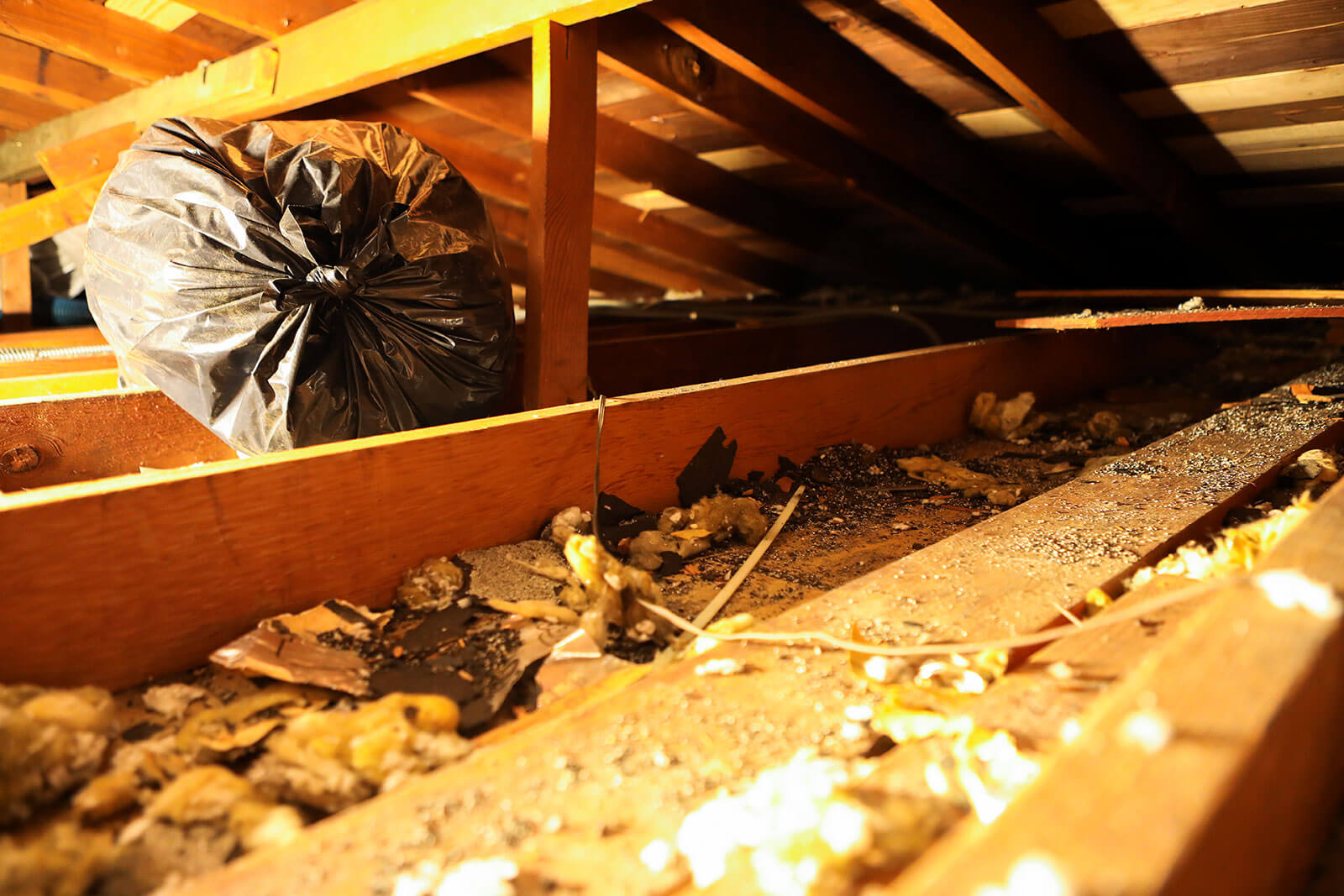
Second, removal and containment of contaminated insulation and nesting material. Contaminated insulation must be removed, bagged, and disposed of according to local regulations. This is where many homeowners underestimate the scale of the job. A small attic with a heavy infestation can produce dozens of 30-gallon contractor bags of contaminated insulation and debris. Proper containment prevents cross-contamination to living spaces below.
Third, decontamination and sanitization. Droppings and urine carry bacteria and pathogens; dry vacuuming will aerosolize them. A professional crew uses HEPA-filtered vacuums and applies enzyme cleaners and disinfectants that are safe for the home and effective on organic matter. For heavy contamination, fogging or electrostatic sprayers may be used to attic clean up services ensure coverage on rafters, joists, and insulation fibers.
Fourth, exclusion and repairs. Cleaning without blocking entry routes is temporary. Exclusion includes sealing holes around vents, eaves, roof penetrations, and utility lines, installing one-way doors where appropriate, and repairing damaged fascia or soffits. Exclusion often requires carpentry or sheet metal work to be long-lasting.
Fifth, prevention and monitoring. A good company will leave bait stations or live traps in strategic locations and provide a monitoring plan. They should also advise on attic ventilation and insulation upgrades that reduce attractiveness to rodents.
Costs, timelines, and realistic expectations
You will hear a range of price quotes. For a basic attic clean up with light contamination, expect a few hundred dollars to 1,000 dollars. For moderate to heavy infestations in a typical Los Angeles attic, most homeowners will be in the 1,500 to 4,000 dollar range, with the high end covering full insulation replacement, wiring repairs, and exclusion work. Exceptional cases involving structural repairs or asbestos abatement escalate costs further.
Timeframes vary. An inspection and initial trapping plan can be completed in a day. Actual remediation, including insulation removal and exclusion work, commonly takes two to five days depending on the severity and crew size. If electrical or roof contractors need to be scheduled for repairs, that can add days or weeks.
A common mistake is budgeting only for removal without factoring in exclusion. I once worked on a Craftsman home where the owner spent 800 dollars removing contaminated insulation and cleaning the attic, but did not seal a 2-inch gap under the soffit. Rodents returned within three weeks. The house ended up costing the owner more because the second visit required full exclusion plus additional insulation replacement.
Health risks and liability
Attic contamination is not a minor bad smell. Rodent droppings carry bacteria such as salmonella and hantavirus in certain rodent species. Hantavirus pulmonary syndrome is rare in California but can be severe. Beyond pathogens, the ammonia from urine degrades indoor air quality and aggravates asthma and allergies. Disposal of contaminated material also requires safe handling to protect workers and occupants. Verify that any attic cleaning company in Los Angeles CA uses personal protective equipment, HEPA filtration, and follows occupational safety guidelines. Liability matters too. A company should carry insurance that covers property damage and worker injuries.
How to choose an attic cleaning company in Los Angeles
The market includes handyman services, general pest companies, and specialist attic cleaners. Not https://rodentcontrolinc.com/attic-cleaning/ all are equal. When you call for a quote, listen for specifics rather than generic language. A quality provider will describe assessment steps, bagging and disposal methods, HEPA vacuum use, the disinfectants they plan to apply, and a clear exclusion plan.
Ask these questions: How will you confirm there are no animals still inside? Do you remove insulation or only treat in place? Which disinfectants and application methods do you use? Can you document exclusion work and provide before and after photos? Are you licensed and insured? If the company uses subcontractors for carpentry or electrical repairs, get the names and verify credentials.
Here's a short checklist to use when calling companies in LA. Limit of five items for clarity.
- Confirm license and insurance, ask for license number. Request a detailed scope that lists inspection, removal, sanitization, and exclusion steps. Ask about HEPA vacuums and PPE protocols for workers. Get an itemized estimate with clear line items for insulation, labor, and disposal. Request references or photos from recent attic rat cleanup jobs.
Why local knowledge counts
Los Angeles has microclimates and building stock variety. A company familiar with LA will know common rodent entry points for local home types: concrete perimeter gaps in mid-century ranches, attic vents in Spanish-style roofs, and termite-damaged eaves in older bungalows. Local teams also understand municipal rules about waste disposal, noise restrictions, and permit requirements for certain roof or electrical repairs.
Anecdote: a West Adams bungalow where local experience mattered
A homeowner in West Adams called after hearing scratching in the attic at night. The first company they hired used snap traps and sprayed an aerosol pesticide. The activity stopped for a week then resumed. The second team I worked with found a three-inch gap in the roof-to-gable transition that served as a primary entry point. They removed contaminated insulation, HEPA-vacuumed the attic, applied enzyme cleaners to rafters, sealed the entry with one-quarter-inch steel mesh and sealant, replaced five inches of insulation and left traps inside until activity ceased. Total bill was higher than the first company, but the homeowner avoided repeating the whole process and repaired wiring the rodents had chewed. That case underscored that sealing the hole matters as much as removal.
Insulation choices after cleanup
Once contamination is removed, homeowners must decide what to put back. Fiberglass batt is common and inexpensive, but blown-in cellulose or blown fiberglass offers better coverage and can reduce thermal bridging when properly installed. Attic rat cleanup often leads to upgrades that improve comfort and energy efficiency. Consider insulation R-values appropriate for Los Angeles zones, attic ventilation needs, and whether adding a radiant barrier will help. A reputable attic cleaning company can advise but do not accept hard-sell upgrades without written benefit estimates.
DIY versus professional work
DIY is tempting, especially for homeowners who want to save money. Small, recent invasions with minimal droppings and obvious entry points can sometimes be addressed safely by experienced homeowners using PPE, HEPA vacuums, and proper sealing materials. However, without HEPA filtration and proper disinfectants, cleanup can put occupants and handlers at risk. Wiring damage is often missed by nonprofessionals. For moderate to heavy contamination, when droppings are widespread, or when you detect persistent odors, hire professionals.
Selecting Rodent Control Inc. Or similar reputable services
Rodent Control Inc. And other established pest control companies often provide integrated pest control attic cleaning services in Los Angeles CA, combining pest management with attic remediation and exclusion. When evaluating a company like Rodent Control Inc., look for transparency in methods, photo documentation, and a warranty or guarantee that covers re-entry for a certain period. A reasonable warranty might be 30 to 90 days for proof of exclusion and up to a year for rodent activity monitoring with periodic checks.
Watch for red flags: companies that promise a single treatment to solve long-term infestations, those that refuse to remove contaminated insulation, or those that avoid showing proof of insurance. Equally important is clear communication about additional costs, such as electrical repairs, permit fees, or replacement insulation.
Preventing re-infestation
After cleanup and repairs, prevention is ongoing. Trim tree branches that overhang roofs because rats use branches as runways. Keep vents screened with hardware cloth, not plastic mesh. Seal pipe penetrations with copper or stainless steel mesh, not expandable foam alone. Keep food sources locked away; rats will enter attics to access pet food, birdseed, or poorly stored pantry items. Maintain perimeter vegetation so it does not provide cover right up to the house.
A three-step mental model helps: remove attractants, deny entry, monitor. Remove attractants by securing food and managing compost and trash. Deny entry by sealing openings and maintaining eaves. Monitor with traps or bait stations and by checking attics seasonally for early signs of activity.
How to plan for the work
Schedule attic work during mild weather if possible. Roofing repairs or attic ventilation work is safer and more effective in dry conditions. Ask the company whether they will need interior access, such as removing ceiling insulation or accessing the attic from inside. Clear storage from the attic access point and remove fragile items that may be exposed to dust. Expect some disruption: trucks, a crew of two to four people for larger jobs, and the sound of vacuuming and carpentry.
Realistic outcomes and warranty expectations
Complete eradication of rodents from a neighborhood is unrealistic. Your goal is to make your home unattractive and inaccessible. A good company will reduce activity to zero with exclusion and ongoing monitoring, but they cannot control adjacent properties. Expect a follow-up inspection within 30 days, and a clear path to address recurrence within a specified warranty period.
Final perspective
Rodent infestations in attics are messy, expensive, and hazardous if left untreated. Attic cleaning in Los Angeles CA that integrates careful inspection, HEPA-grade removal, thorough sanitization, and targeted exclusion protects health, preserves insulation performance, and prevents repeat visits. Choosing a reputable attic cleaning company, asking the right questions about methods and insurance, and investing in exclusion work upfront will usually cost less over time than repeated band-aid fixes.
If you have seen droppings, heard scratching, or noticed lost insulation and odors, treat the attic as a priority repair. Bring in a company that documents the problem, removes contamination safely, and seals the home tightly. The few hundred to a few thousand dollars you spend now can prevent wiring fires, prolonged health impacts, and recurring infestations that eat away at your time, money, and peace of mind.
Rodent Control Inc.
Los Angeles, CA, United States
+1 (323) 553-5551
[email protected]
Website: https://rodentcontrolinc.com/